Traditional Dominican Dishes You Must Try in Samaná: Complete Food Guide 2026
Introduction
A visit to the Samaná Peninsula is not complete without discovering its traditional food. Located in the northeastern Dominican Republic, Samaná is famous for its beautiful beaches, coastal communities, tropical vegetation, and distinctive culinary traditions.
Dominican cuisine combines Indigenous Taíno, African, and Spanish influences. However, Samaná has developed its own recognizable food identity, with coconut, ginger, fresh seafood, plantains, rice, and locally available ingredients playing important roles.
One of the region's most famous specialties is pescado con coco, a traditional fish dish prepared with coconut milk. The peninsula is also known for coconut-based breads and sweets associated with its historical communities.
From a traditional Dominican breakfast to a satisfying lunch and homemade dessert, there are many flavors worth discovering.
This complete food guide introduces the traditional Dominican dishes you should know about when exploring Samaná in 2026.
1. What Makes Samaná's Food Culture Special?
Samaná's cuisine reflects the region's history, geography, and cultural diversity.
Unlike inland parts of the Dominican Republic, the peninsula has a strong coastal food tradition. Fish and seafood are important ingredients, while coconut and ginger give many local preparations their distinctive character.
The culinary identity of Samaná is also connected to the history of African American settlers who arrived in the region during the nineteenth century. Their cultural traditions and cooking practices became part of the peninsula's broader food heritage.
Important Ingredients in Samaná Cuisine
Coconut: Coconut milk and coconut oil are used in several traditional preparations, including fish dishes, rice, breads, and sweets.
Ginger: Ginger adds a distinctive aroma and flavor to certain local recipes.
Plantains: Green and ripe plantains are used in many Dominican meals.
Rice and beans: These are essential ingredients in everyday Dominican cooking.
Seafood: The coastal location makes fish and other seafood important components of regional food culture.
Garlic and herbs: Garlic, oregano, cilantro, and onions help create the familiar flavors of Dominican cooking.
The combination of these ingredients gives Samaná's cuisine a character that distinguishes it from other parts of the country.
2. Pescado con Coco: Samaná's Signature Dish
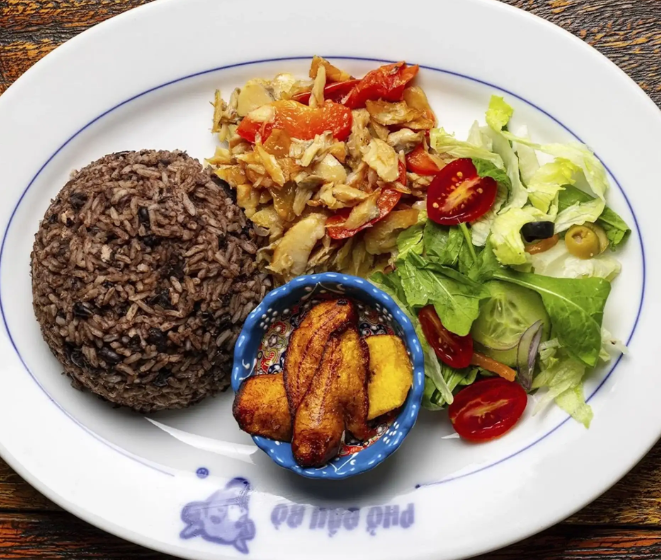
Pescado con coco, meaning fish with coconut, is arguably the most recognizable traditional dish associated with Samaná.
It combines fresh fish with a flavorful coconut-based sauce. Coconut milk provides a creamy texture, while garlic, onions, cilantro, ginger, and local seasonings contribute additional flavor.
The dish reflects the importance of coconut in the region's culinary heritage.
What Does Pescado con Coco Taste Like?
The flavor is generally rich, creamy, and aromatic.
The coconut sauce complements the natural flavor of the fish without necessarily overpowering it. Depending on the family recipe or restaurant, the sauce may also contain tomato, peppers, and other seasonings.
Some versions use fresh coconut milk prepared locally, which contributes to the traditional character of the dish.
How Is It Traditionally Served?
Pescado con coco is commonly accompanied by:
- White rice
- Moro de guandules
- Fried or boiled plantains
- Fresh vegetables
- Local side dishes
Why Is It Important in Samaná?
Coconut is one of the defining ingredients of the peninsula's food culture. It appears in both savory dishes and sweet preparations.
Pescado con coco represents this relationship between local ingredients, coastal communities, and culinary history.
Where to learn about it: Traditional Dominican food establishments and restaurants in Santa Bárbara de Samaná, Las Terrenas, and Las Galeras.
3. Mangú: A Traditional Dominican Breakfast
Mangú is one of the most recognizable breakfast dishes in the Dominican Republic.
It is prepared using boiled green plantains that are mashed into a soft consistency. A little cooking water, butter, or oil may be added to achieve the desired texture.
The dish is often served with sautéed onions and other breakfast accompaniments.
What Makes Mangú Special?
Mangú is simple, filling, and closely connected to Dominican everyday food culture.
Its mild plantain flavor makes it suitable for different combinations of ingredients.
Common Accompaniments
Traditional combinations may include:
- Fried cheese
- Eggs
- Sautéed onions
- Ripe plantains
- Other locally prepared breakfast items
A familiar Dominican breakfast combination is called Los Tres Golpes, traditionally featuring mangú, fried cheese, and salami.
Visitors can also find variations depending on the restaurant or household.
Best time to try it: Breakfast.
4. La Bandera Dominicana: The Dominican National Meal
La Bandera Dominicana translates to "The Dominican Flag."
It is one of the country's best-known traditional meals and represents the everyday cooking culture of the Dominican Republic.
The traditional combination includes white rice, red beans, and meat.
The three main components reflect the colors of the Dominican national flag, which explains the name.
Main Ingredients
White rice: Usually prepared with salt and oil.
Red beans: Cooked with seasonings, vegetables, and herbs.
Meat: Chicken, beef, or pork may be included depending on the preparation.
Side dishes: Salad, avocado, or fried plantains may accompany the meal.
Why Try La Bandera in Samaná?
Although it is a national dish rather than a specialty exclusive to Samaná, it provides a good introduction to traditional Dominican home cooking.
It is commonly associated with lunchtime meals and is a useful dish for understanding everyday food traditions.
5. Sancocho: A Hearty Traditional Dominican Stew
Sancocho is a famous Dominican stew prepared with a combination of meats, root vegetables, plantains, and aromatic seasonings.
It is especially associated with family gatherings and special occasions.
Recipes differ between households, and each family may have its own preferred combination of ingredients.
What Goes into Sancocho?
Common ingredients include:
- Chicken or other meats
- Yuca
- Yautía
- Ñame
- Plantains
- Pumpkin or calabaza
- Garlic
- Onions
- Cilantro and other herbs
The ingredients are slowly cooked together to create a thick and flavorful broth.
The Cultural Importance of Sancocho
Sancocho is more than an ordinary meal.
Preparing it can bring family members together, with different people contributing ingredients and helping with the cooking.
It is often associated with weekend gatherings and celebrations.
Best time to try it: Ask local restaurants whether they prepare it on weekends or special occasions.
6. Moro de Guandules: Rice with Pigeon Peas
Moro de guandules is a popular Dominican rice dish prepared with pigeon peas, seasonings, and sometimes coconut milk.
It is particularly interesting in Samaná because coconut is frequently incorporated into the region's cooking.
Main Ingredients
- Rice
- Pigeon peas
- Coconut milk in some regional preparations
- Garlic
- Onion
- Bell pepper
- Cilantro
- Other seasonings
The combination creates a flavorful rice dish that can accompany fish, chicken, or other traditional meals.
Why Try It?
Moro de guandules is a good example of how familiar Dominican ingredients can be prepared with regional variations.
In Samaná, coconut can add another layer of flavor and connect the dish to the peninsula's distinctive culinary traditions.
7. Tostones: Crispy Green Plantain Slices
Tostones are a popular side dish throughout the Dominican Republic.
They are prepared using unripe green plantains, which are cut into pieces, fried, flattened, and fried again until crispy.
The result is a savory plantain dish with a golden exterior and soft interior.
How Are Tostones Served?
They may accompany:
- Fish dishes
- Chicken meals
- Rice and beans
- Seafood preparations
- Other traditional Dominican plates
Tostones are popular because their mild flavor works well with many different foods.
They are also a useful introduction to the importance of plantains in Dominican cooking.
8. Maduros: Sweet Fried Ripe Plantains
Maduros are prepared from ripe plantains rather than green ones.
As plantains ripen, their natural sweetness increases. When cooked, they develop a soft texture and a golden-brown exterior.
What Makes Maduros Different from Tostones?
The main difference is the ripeness of the plantain and the resulting flavor.
FeatureTostonesMadurosPlantainGreenRipeFlavorSavoryNaturally sweetTextureCrispySoftTypical useSide dishSide dish
Maduros are a popular accompaniment to traditional Dominican meals and provide a pleasant contrast to savory dishes.
9. Yuca Hervida: Traditional Boiled Cassava
Yuca, also known as cassava, is an important root vegetable in Dominican cuisine.
Yuca hervida simply means boiled cassava.
It is prepared until tender and can be served with onions, seasoning, or other accompaniments.
Why Is Yuca Popular?
Yuca has a mild flavor and a firm, satisfying texture.
It is used in several traditional Caribbean and Latin American food cultures.
In the Dominican Republic, it may be served as part of breakfast or alongside other savory dishes.
How Is It Enjoyed?
Common preparations include:
- Boiled yuca with onions
- Yuca served with traditional breakfast dishes
- Yuca accompanied by savory sauces
- Yuca as a side dish with meat or vegetables
Yuca is another example of the important role root vegetables play in Dominican food traditions.
10. Pescado Frito: Traditional Fried Fish
Because Samaná is a coastal region, fish has a significant place in its food culture.
Pescado frito, meaning fried fish, is a familiar Dominican preparation.
The fish is seasoned with ingredients such as garlic, salt, citrus, and oregano before being cooked.
Common Accompaniments
Fried fish may be served with:
- Tostones
- White rice
- Fresh salad
- Lemon or lime
- Other traditional side dishes
The preparation can vary depending on the type of fish and the restaurant's recipe.
Why Is It Popular in Samaná?
The peninsula's coastal communities have a long relationship with seafood.
Fish dishes therefore represent an important part of local dining culture and regional identity.
11. Coconut Bread: A Special Part of Samaná's Heritage
Coconut bread is one of the interesting traditional baked foods associated with Samaná.
The use of coconut in local baking reflects the region's strong connection to coconut-based cooking.
Different recipes may use grated coconut, coconut milk, flour, sugar, and other ingredients.
What Makes Samaná Coconut Bread Special?
Coconut provides a recognizable aroma and flavor.
Traditional baking practices in the region are also connected to the history of African American families who settled in Samaná during the nineteenth century.
Their culinary heritage helped preserve distinctive breads and sweets that remain part of the peninsula's cultural identity.
Visitors interested in local food traditions may encounter coconut bread in traditional bakeries and community food establishments.
12. Johnnycake: A Traditional Caribbean Bread
Johnnycake is a simple bread found in different Caribbean food traditions.
It is also associated with the culinary heritage of Samaná.
Depending on the recipe, it may be prepared using flour, coconut milk or regular milk, butter or oil, and other basic ingredients.
Its texture can vary between soft and slightly dense.
Why Is Johnnycake Worth Discovering?
Johnnycake reflects the wider cultural connections between Caribbean communities.
It is an example of how traditional recipes have travelled between regions and developed local variations.
Visitors interested in Samaná's food history may find it particularly interesting because of its connection to the area's historical communities.
13. Conconete: A Traditional Coconut Sweet
Conconete is a traditional coconut-based sweet associated with Samaná.
It is generally prepared using grated coconut, sugar, and other ingredients that vary between recipes.
The result is a sweet baked or cooked preparation with a distinctive coconut flavor.
Why Is Conconete Special?
It reflects the importance of coconut in Samaná's culinary identity.
Traditional breads and sweets are also connected to the African American heritage of families who settled in the region during the nineteenth century.
Conconete is therefore interesting not only as a dessert but also as part of the peninsula's cultural history.
14. Traditional Coconut and Ginger Flavors
Coconut and ginger are two important ingredients in Samaná's food traditions.
They are used in different combinations across savory dishes, rice preparations, breads, and sweets.
Coconut in Local Cuisine
Coconut may appear as:
- Fresh coconut milk
- Grated coconut
- Coconut-based sauces
- Coconut-flavored rice
- Coconut breads and desserts
Its versatility makes it one of the defining ingredients of regional cooking.
Ginger in Local Recipes
Ginger contributes a warm and aromatic flavor.
It can be used in sweet preparations and certain traditional recipes.
Together, coconut and ginger help create the distinctive flavor combinations associated with Samaná.
15. Tropical Fruits and Fresh Local Ingredients
The Dominican Republic has a wide variety of tropical fruits.
Depending on the season and availability, visitors may encounter:
Mango: A sweet tropical fruit commonly eaten fresh.
Papaya: A soft fruit often served at breakfast.
Pineapple: Known for its sweet and refreshing flavor.
Passion fruit: Used in juices and other fruit preparations.
Guava: Commonly used in sweets and fruit-based preparations.
Coconut: Used in both food and traditional sweets.
Trying locally available fruit is a simple way to experience the region's tropical food culture.
16. Where to Discover Traditional Food in Samaná
Visitors can experience Samaná's culinary traditions in several communities across the peninsula.
Santa Bárbara de Samaná
The provincial capital offers opportunities to explore traditional Dominican food and regional coconut-based dishes.
Local restaurants and food establishments provide different interpretations of familiar Dominican recipes.
The town's culinary identity is closely connected to the surrounding bay and the peninsula's historical communities.
Las Terrenas
Las Terrenas has a diverse food scene that combines traditional Dominican cooking with international influences.
Pueblo de los Pescadores is a well-known dining area where visitors can discover the coastal restaurant atmosphere.
The wider town also offers opportunities to explore traditional meals and regional specialties.
Las Galeras
Las Galeras has a smaller coastal-community atmosphere.
Its food culture reflects the region's relationship with the sea and the importance of traditional local ingredients.
Visitors can discover different Dominican food preparations while learning more about the community's coastal identity.
Traditional Bakeries
Traditional bakeries are particularly interesting for visitors who want to learn about coconut-based breads and sweets.
Look for local specialties such as coconut bread and conconete.
Availability may vary between businesses and seasons.
17. A Simple Dominican Food Tasting Plan
Visitors interested in trying several traditional dishes can use this sample food-focused plan.
Breakfast
Start with a traditional Dominican breakfast featuring:
- Mangú
- Fried cheese
- Eggs
- Sautéed onions
- Fresh tropical fruit
Lunch
Choose a traditional Dominican lunch featuring:
- La Bandera Dominicana
- Rice and beans
- A plantain side dish
- Fresh vegetables
Alternatively, try pescado con coco to experience one of Samaná's most distinctive regional specialties.
Afternoon Food Experience
Discover traditional baked foods such as:
- Coconut bread
- Johnnycake
- Conconete
Dinner
Choose a traditional meal such as:
- Moro de guandules
- Pescado frito
- Yuca
- Tostones
This is a sample food guide rather than a fixed restaurant itinerary. The dishes available will depend on the establishment and the day's menu.
18. Tips for Enjoying Dominican Food in Samaná
A little preparation can make discovering local cuisine more enjoyable.
Ask about regional specialties: If you are visiting a restaurant, ask whether it serves pescado con coco or another traditional Samaná preparation.
Try local ingredients: Coconut, ginger, plantains, rice, and tropical fruits are important parts of the regional food culture.
Explore traditional bakeries: They can offer insight into the area's history through coconut breads and sweets.
Check ingredients: Recipes differ between establishments. Ask about ingredients if you have allergies or dietary requirements.
Respect local food traditions: Traditional recipes may differ from what you are familiar with, and that variety is part of their appeal.
Support local businesses: Choosing locally operated restaurants and bakeries can help support community food traditions.
19. Frequently Asked Questions
1. What is the most famous traditional dish in Samaná?
Pescado con coco, or fish cooked in coconut sauce, is one of Samaná's best-known regional specialties.
2. What food is the Dominican Republic famous for?
The Dominican Republic is known for dishes such as mangú, la bandera, sancocho, moro de guandules, tostones, and various plantain preparations.
3. What is pescado con coco?
Pescado con coco is a traditional fish dish prepared with coconut milk, herbs, garlic, onions, and seasonings. It is particularly associated with Samaná.
4. What is a traditional Dominican breakfast?
Mangú is a popular Dominican breakfast dish. It is made from mashed boiled green plantains and is commonly served with eggs, cheese, and other accompaniments.
5. What does La Bandera Dominicana contain?
La Bandera traditionally includes white rice, red beans, and meat. It is one of the most recognizable everyday meals in the Dominican Republic.
6. What is sancocho?
Sancocho is a hearty Dominican stew prepared with different meats, root vegetables, plantains, and seasonings.
7. Why is coconut important in Samaná cuisine?
Coconut is widely used in regional cooking. It contributes to the flavor of fish dishes, rice, breads, and traditional sweets.
8. What traditional desserts should visitors try in Samaná?
Coconut-based specialties such as conconete and traditional coconut bread are worth discovering.
9. Where can visitors discover traditional Dominican food in Samaná?
Santa Bárbara de Samaná, Las Terrenas, and Las Galeras are useful places to explore traditional Dominican food and regional culinary specialties.
10. Is Samaná food different from food in other parts of the Dominican Republic?
Samaná shares the country's broader culinary traditions, but its strong use of coconut, ginger, seafood, and distinctive historical baking traditions gives its regional cuisine a recognizable identity.
Conclusion
Traditional Dominican food is an important part of the Samaná Peninsula's cultural identity.
From the famous pescado con coco to mangú, la bandera, sancocho, moro de guandules, and traditional coconut sweets, the region offers a fascinating combination of flavors and culinary traditions.
What makes Samaná particularly interesting is the relationship between its ingredients and its history. Coconut and ginger contribute to the region's distinctive cuisine, while seafood reflects the importance of coastal communities.
Traditional breads such as johnnycake and coconut specialties such as conconete also provide a glimpse into the area's cultural heritage.
For visitors exploring the Dominican Republic in 2026, discovering Samaná's traditional food is an excellent way to experience more than its beaches and landscapes. It is an opportunity to appreciate the people, history, ingredients, and traditions that make this Caribbean destination unique.

Local explorer & expert guide in Whale Miches.