Los Haitises National Park: Mangroves, Caves, Wildlife & Conservation (2026)
Los Haitises National Park is one of the most distinctive natural landscapes in the Dominican Republic. Located in the northeastern part of the country, this protected area is recognized for its extensive mangrove ecosystems, limestone formations, tropical forests, caves, and remarkable biodiversity.
The name Los Haitises comes from the Taíno language and is commonly translated as "mountainous land." Its unusual landscape combines green vegetation, coastal waterways, small islands, and limestone hills that rise dramatically above the surrounding environment.
Beyond its natural beauty, the park also preserves important cultural heritage. Its caves contain evidence of the Indigenous Taíno people, including ancient pictographs and petroglyphs.
This 2026 guide explores the natural and cultural features that make Los Haitises special, explains the importance of its ecosystems, and highlights the conservation principles that help protect this remarkable national park.
What Is Los Haitises National Park?
Los Haitises National Park is a protected natural area in the Dominican Republic.
According to the official Dominican Republic tourism website, the park covers approximately 1,600 square kilometers. It is one of the country's major protected landscapes and is especially important for its combination of terrestrial and coastal ecosystems.
The park includes:
- Extensive mangrove forests
- Tropical rainforest
- Limestone hills and rock formations
- Coastal waterways
- Small islands and cays
- Natural caves
- Important bird habitats
- Archaeological and cultural heritage
The variety of environments makes Los Haitises ecologically significant. Its landscapes support different plant and animal species while also preserving evidence of the region's natural and human history.
Why Is Los Haitises So Famous?
Los Haitises is famous because several remarkable natural features exist within one protected landscape.
Unlike destinations known mainly for beaches or resorts, this national park is recognized for its geological formations, mangrove environments, tropical vegetation, and biodiversity.
1. Limestone Formations
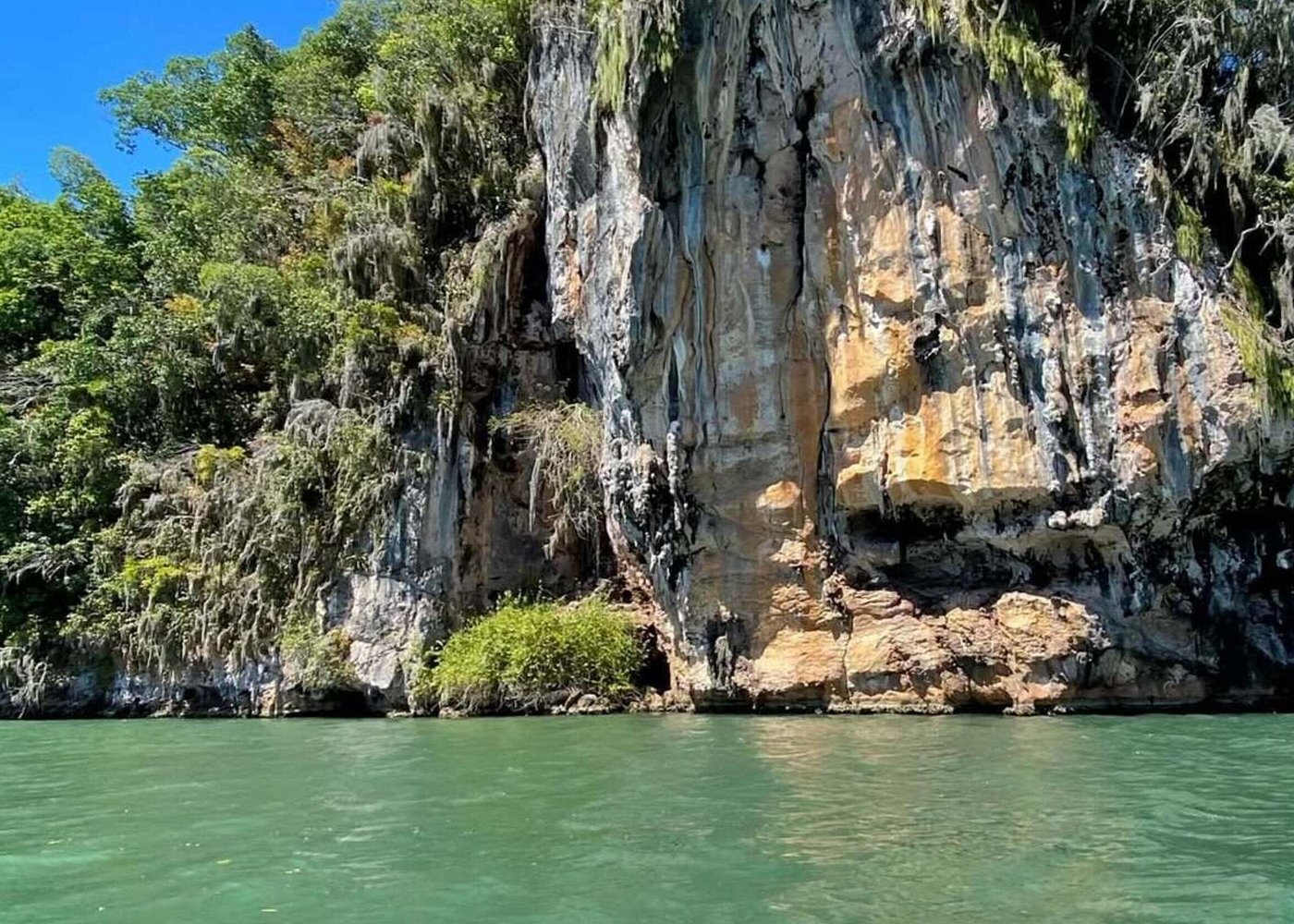
One of the most recognizable features of Los Haitises is its limestone landscape.
The park contains unusual rocky hills and formations known as mogotes. These formations rise above surrounding waterways and vegetation, creating a distinctive natural appearance.
The landscape developed through geological processes involving limestone and water over long periods.
2. Mangrove Ecosystems
Mangroves are among the most important ecosystems in Los Haitises.
These coastal forests grow in environments influenced by seawater and tidal changes.
Their complicated root systems provide important habitats for fish, crustaceans, birds, and other organisms.
3. Natural Caves
The national park is also known for its caves.
Some contain geological formations, while others preserve evidence of Indigenous human activity.
These caves are important natural and archaeological resources that require careful conservation.
4. Rich Birdlife
Los Haitises supports an impressive variety of bird species.
The official Dominican Republic tourism authority identifies species including the endangered Ridgway's hawk, Sierra woodpecker, Hispaniolan woodpecker, pelicans, herons, and egrets.
This makes the park an important landscape for understanding Caribbean bird biodiversity.
The Mangrove Forests of Los Haitises
Mangroves are one of the defining features of Los Haitises National Park.
They are specialized trees and shrubs that grow in coastal environments where freshwater and seawater interact.
Unlike many ordinary forest plants, mangroves are adapted to salty or brackish conditions.
Why Are Mangroves Important?
Mangroves provide several ecological benefits.
Wildlife habitat: Their roots provide shelter and feeding environments for numerous marine and coastal organisms.
Coastal protection: Mangrove vegetation can help reduce the effects of waves and coastal erosion.
Water quality: Mangrove systems can trap sediments and help filter certain materials from coastal water.
Carbon storage: Mangrove ecosystems store significant quantities of carbon in their vegetation and soils.
Biodiversity: They support interconnected food webs involving fish, birds, invertebrates, and other species.
Different Types of Mangroves
Caribbean mangrove environments commonly contain several major mangrove species.
- Red mangrove
- Black mangrove
- White mangrove
- Buttonwood
Each species has different characteristics and adaptations.
Together, they help create complex coastal habitats.
The Limestone Landscape and Mogotes
The distinctive hills of Los Haitises are among its most recognizable geological features.
These formations are associated with karst landscapes, which develop when water gradually dissolves soluble rocks such as limestone.
Over geological time, this process creates unusual landforms, including caves, cavities, depressions, and irregular rock surfaces.
What Is a Mogote?
A mogote is an isolated or relatively steep-sided limestone hill associated with karst terrain.
The mogotes of Los Haitises rise above the surrounding green landscape and coastal environment.
Their unusual appearance contributes significantly to the park's identity.
Why Are Karst Landscapes Important?
Karst landscapes are important because they contain geological structures that influence groundwater movement, soil development, and natural drainage.
They can also contain cave systems that provide habitats for specialized organisms.
The geology of Los Haitises is therefore important not only for its appearance but also for understanding the natural development of the region.
Caves and Taíno Heritage
The caves of Los Haitises have both natural and cultural significance.
Some caves contain archaeological evidence associated with the Taíno people, who were among the Indigenous inhabitants of the Caribbean before European colonization.
The cultural importance of these caves is reflected in the presence of ancient pictographs and petroglyphs.
What Are Pictographs?
Pictographs are images created by applying pigments to a surface.
They provide evidence of historical artistic expression and cultural practices.
What Are Petroglyphs?
Petroglyphs are images or symbols created by modifying a rock surface.
They may include carved lines, figures, and other designs.
Both types of archaeological evidence help researchers understand aspects of Indigenous Caribbean history.
Why Should Cave Art Be Protected?
Cave artwork is extremely vulnerable to physical and environmental damage.
Touching, scratching, marking, or attempting to remove archaeological material can permanently damage cultural resources.
These historical features should be preserved for scientific research, education, and future generations.
Wildlife and Biodiversity in Los Haitises
Los Haitises supports a wide variety of wildlife because it contains several interconnected habitats.
Mangroves, forests, wetlands, caves, and coastal environments each provide different ecological conditions.
Birds of Los Haitises
Birdlife is one of the park's major natural attractions.
Notable species include:
Ridgway's hawk: An endangered bird of prey native to Hispaniola.
Sierra woodpecker: A regional woodpecker associated with Caribbean forest environments.
Hispaniolan woodpecker: A distinctive bird native to Hispaniola.
Pelicans: Large coastal birds associated with marine environments.
Herons and egrets: Wading birds commonly associated with wetlands and coastal habitats.
The presence of these birds demonstrates the ecological importance of the park.
Why Is Biodiversity Important?
Biodiversity refers to the variety of life within an environment.
Healthy ecosystems depend on interactions between plants, animals, microorganisms, and their physical surroundings.
For example, birds contribute to food webs, mangroves provide shelter, and microorganisms help recycle nutrients.
Maintaining biodiversity supports the stability and long-term health of natural environments.
The Importance of Los Haitises for the Dominican Republic
Los Haitises is important for more than its natural beauty.
The park contributes to several areas of environmental and cultural value.
Environmental Protection
The protected landscape helps conserve forests, mangroves, wildlife habitats, and important geological features.
Scientific Research
Its different ecosystems provide opportunities for studying tropical biodiversity, karst geology, coastal processes, and environmental change.
Cultural Heritage
The caves preserve archaeological evidence that contributes to understanding the history of Indigenous Caribbean communities.
Environmental Education
The park provides an important example of how natural landscapes and cultural heritage can be connected.
Environmental Threats Facing Mangrove Ecosystems
Although mangroves are highly adapted to difficult coastal environments, they are not immune to environmental pressures.
Several factors can threaten their long-term health.
Coastal Development
Uncontrolled coastal development may result in habitat loss or changes to natural water circulation.
Pollution
Plastic waste, wastewater, and other pollutants can damage coastal habitats and affect wildlife.
Climate Change
Rising sea levels and changing weather patterns can influence mangrove environments.
Habitat Disturbance
Human activities that damage roots, vegetation, and coastal soils can reduce ecosystem health.
Protecting mangroves requires effective environmental management and responsible use of coastal resources.
Conservation and Responsible Tourism
Los Haitises is a protected natural area, so conservation is an important part of its identity.
The Dominican Republic's environmental authorities establish rules for protected areas to help visitors appreciate natural environments without damaging them.
Responsible environmental behavior includes:
- Keeping the environment free of rubbish.
- Avoiding damage to vegetation.
- Never feeding or chasing wildlife.
- Leaving natural materials where they belong.
- Respecting protected archaeological resources.
- Avoiding marks or scratches on cave walls.
- Respecting restricted areas.
- Following official conservation requirements.
These principles help preserve the park's natural and cultural value.
Why Is Sustainable Tourism Important?
Sustainable tourism aims to balance tourism-related activities with environmental protection and community well-being.
For a destination such as Los Haitises, this balance is particularly important.
Its natural resources are not unlimited, and sensitive ecosystems require careful management.
Responsible tourism can help create awareness about biodiversity, support local environmental education, and encourage respect for protected landscapes.
However, tourism should never come at the expense of wildlife or cultural heritage.
Los Haitises and the Local Community
The wider region surrounding Los Haitises includes communities whose histories and livelihoods are connected to the natural environment.
Sabana de la Mar is one of the communities associated with the park's southern surroundings.
Local communities are important stakeholders in the long-term protection of natural areas.
Community participation can contribute to environmental awareness, cultural preservation, and sustainable development.
Recognizing local knowledge and community interests is an important part of responsible conservation.
Los Haitises Compared With Other Dominican Republic Landscapes
The Dominican Republic contains several different types of natural landscapes.
Los Haitises is especially distinctive because of its combination of mangroves, limestone formations, rainforest, caves, and coastal biodiversity.
Other areas of the country are more widely recognized for mountain environments, dry forests, waterfalls, or extensive beaches.
This diversity demonstrates why the Dominican Republic is environmentally significant within the Caribbean.
Frequently Asked Questions
1. Where is Los Haitises National Park located?
Los Haitises National Park is located in the northeastern part of the Dominican Republic. It is associated with the wider Samaná Bay region and surrounding coastal landscapes.
2. What does Los Haitises mean?
Los Haitises is derived from the Taíno language and is commonly translated as "mountainous land."
3. How large is Los Haitises National Park?
The official Dominican Republic tourism website describes the park as covering approximately 1,600 square kilometers.
4. What is Los Haitises famous for?
The park is known for its mangroves, limestone formations, caves, tropical vegetation, birdlife, and Taíno cultural heritage.
5. What are mogotes?
Mogotes are distinctive limestone hills associated with karst landscapes. They are among the most recognizable geological features of Los Haitises.
6. Why are mangroves important in Los Haitises?
Mangroves provide wildlife habitat, support coastal ecosystems, help reduce erosion, store carbon, and contribute to biodiversity.
7. What animals live in Los Haitises?
The park supports numerous birds and other wildlife. Notable birds include Ridgway's hawk, Hispaniolan woodpecker, pelicans, herons, and egrets.
8. Does Los Haitises contain Taíno heritage?
Yes. Some caves preserve evidence of Indigenous Taíno cultural activity, including pictographs and petroglyphs.
9. Why should cave artwork be protected?
Cave artwork is an important archaeological resource. Physical damage can permanently destroy historical evidence that cannot be replaced.
10. Why is Los Haitises environmentally important?
It protects interconnected coastal, forest, mangrove, geological, and wildlife habitats that contribute to the Dominican Republic's biodiversity.
11. What is sustainable tourism?
Sustainable tourism aims to minimize environmental harm while respecting local communities, cultural heritage, and natural resources.
12. What makes Los Haitises different from other national parks?
Its combination of coastal mangroves, limestone mogotes, caves, tropical forest, and important bird habitats gives it a distinctive ecological and geological character.
Final Thoughts
Los Haitises National Park is one of the Dominican Republic's most valuable natural and cultural landscapes.
Its mangrove forests, limestone formations, caves, tropical vegetation, and birdlife create an environment that is both ecologically significant and historically meaningful.
The park also demonstrates why conservation is essential. Natural ecosystems and archaeological resources require careful protection so they can remain valuable for future generations.
Understanding Los Haitises means appreciating more than its scenery. It means recognizing the connections between geology, biodiversity, Indigenous heritage, local communities, and environmental sustainability.
In 2026 and beyond, protecting this remarkable landscape remains an important responsibility for the Dominican Republic and everyone who values its natural heritage.

Local explorer & expert guide in Whale Miches.