Samaná Marine Life & Ocean Conservation 2026: A Complete Nature Guide
The Samaná Peninsula in the Dominican Republic is widely admired for its tropical scenery, beautiful coastline, green mountains, and rich natural environment. However, one of its most important attractions is found beneath and around its coastal waters: an impressive variety of marine ecosystems that support diverse wildlife.
Samaná Bay is particularly important for marine biodiversity. Its coastal environments include mangrove forests, coral communities, seagrass habitats, and waters that provide seasonal shelter for marine mammals. These ecosystems are connected and contribute to the environmental health of the northeastern Dominican Republic.
For visitors interested in nature, understanding Samaná's marine environment provides a different perspective on the destination. Beyond its beaches and scenic landscapes, the region represents an important part of Caribbean marine conservation.
This guide explores Samaná marine life, the importance of its coastal ecosystems, the wildlife associated with the bay, and the conservation challenges that deserve attention in 2026.
1. Understanding Samaná Bay's Marine Environment
Samaná Bay is situated in the northeastern Dominican Republic. Surrounded by coastal communities, green hills, and tropical landscapes, it forms an important marine environment in the Caribbean.
The bay covers approximately 850 square kilometres and supports a range of interconnected habitats.
Its natural environment includes:
- Mangrove forests along coastal areas
- Coral reef ecosystems
- Seagrass habitats
- Shallow coastal waters
- Estuarine environments
- Marine mammal habitats
Each ecosystem performs a different environmental function. Together, they support wildlife, maintain ecological balance, and contribute to the natural resources on which coastal communities depend.
The variety of habitats makes Samaná Bay an important location for environmental research and conservation.
2. Humpback Whales: One of Samaná's Most Recognized Marine Species
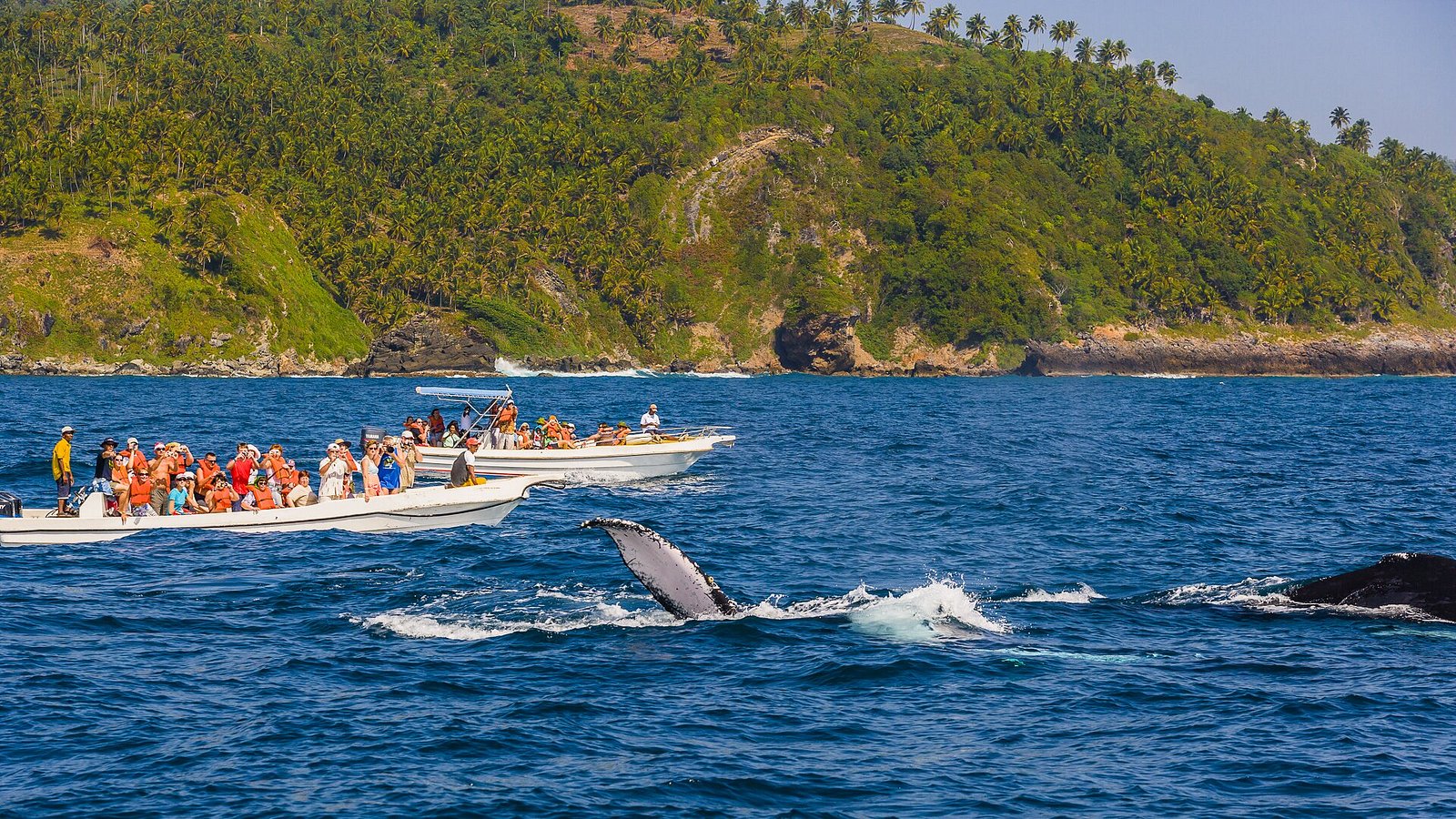
One of the best-known marine animals associated with Samaná is the humpback whale (Megaptera novaeangliae).
These large marine mammals are famous for their seasonal migrations between colder feeding waters in the North Atlantic and warmer tropical breeding areas.
Why Do Humpback Whales Visit Samaná?
During the northern winter, humpback whales migrate toward warmer Caribbean waters. Samaná Bay is an important part of their breeding environment.
The whales use these waters for activities associated with reproduction and the early development of their calves.
The seasonal presence of humpback whales has made the bay internationally recognized for marine mammal conservation.
According to the International Whaling Commission, humpback whales have been identified in Samaná Bay, highlighting the area's significance for the species.
When Are Humpback Whales Present?
The main seasonal period in Samaná generally falls between January and March.
The official Dominican Republic tourism website identifies January 15 to March 30 as the usual whale-watching season.
The exact timing of wildlife presence can vary naturally from year to year.
Why Are Humpback Whales Important?
Humpback whales are important components of marine ecosystems. Their migrations connect different ocean regions, and their presence provides opportunities for scientific research and environmental education.
Protecting them also means protecting the wider marine environment in which they live.
3. Mangrove Forests: Natural Protection for the Coast
Mangroves are among the most valuable coastal ecosystems in Samaná.
These salt-tolerant trees grow in coastal environments where land and water meet. Their distinctive root systems provide shelter and feeding areas for many forms of wildlife.
<AsyncImageGroup query={["Samana Dominican Republic mangrove forest aerial view","Red mangrove roots shallow Caribbean water","Mangrove forest coastal birds Dominican Republic"]} aspectRatio="5:4"/>
Why Are Mangroves Important?
Mangrove forests provide several environmental benefits.
Coastal protection: Their root systems help reduce shoreline erosion and weaken the effects of waves and storms.
Wildlife habitat: Mangroves support fish, birds, mollusks, crustaceans, and other organisms.
Water quality: Mangrove systems can retain sediments and help filter certain pollutants and excess nutrients.
Carbon storage: Mangroves store significant amounts of carbon in their vegetation and soils, contributing to climate-change mitigation.
Mangrove Types in Samaná
The coastal environments around Samaná include several structural types of mangrove forests:
- Edge mangroves
- Riparian mangroves
- Basin mangroves
- Islet or over-flooding mangroves
These types differ according to their location, water movement, salinity, and relationship with surrounding land.
The local conservation organization CEBSE explains how these mangrove environments support coastal biodiversity and help protect the bay.
4. Coral Reefs and Underwater Biodiversity
Coral reefs are another important part of the Caribbean's marine environment.
Although coral reefs occupy relatively limited areas compared with the open ocean, they support a remarkable variety of marine organisms.
<AsyncImageGroup query={["Caribbean coral reef colorful tropical fish underwater","Caribbean coral formations clear water","Caribbean reef fish marine biodiversity"]} aspectRatio="5:4"/>
What Lives Around Coral Reefs?
Healthy Caribbean reef environments can support:
- Tropical reef fish
- Corals
- Sponges
- Sea urchins
- Crabs and other crustaceans
- Mollusks
- Various small marine organisms
The exact species found in individual locations depend on water conditions, habitat quality, and ecological factors.
Why Are Coral Reefs Important?
Coral reefs provide food and shelter for marine organisms. They also contribute to coastal protection by reducing wave energy before it reaches shorelines.
Reefs are important to the environmental and economic health of many Caribbean coastal communities.
Threats to Coral Ecosystems
Coral environments face several pressures, including:
- Rising ocean temperatures
- Coral bleaching
- Marine pollution
- Sedimentation
- Physical damage
- Poorly managed coastal development
Conservation and responsible coastal management are important for maintaining reef health.
5. Seagrass Habitats and Their Ecological Role
Seagrass meadows are underwater habitats formed by flowering plants that grow in shallow marine environments.
They are different from seaweed because seagrasses have roots, leaves, and underground stems.
Benefits of Seagrass Meadows
Seagrass habitats provide important environmental services.
Wildlife support: They provide feeding and shelter areas for marine organisms.
Sediment stabilization: Their roots and leaves help hold underwater sediments in place.
Carbon storage: Seagrass ecosystems can store carbon in their plant material and surrounding sediments.
Water clarity: By stabilizing sediments, they can help reduce the amount of material suspended in the water.
Seagrass habitats are also important to some marine animals, including sea turtles and manatees, which depend on healthy coastal environments for parts of their lives.
6. Sea Turtles and Other Marine Wildlife
The wider marine environment of the Dominican Republic supports several important wildlife groups.
Sea turtles are particularly important because they connect marine and coastal ecosystems.
Depending on the species, sea turtles may use coastal waters for feeding and nearby beaches for nesting.
Why Are Sea Turtles Important?
Sea turtles contribute to marine ecosystem balance through their feeding relationships.
Their survival depends on healthy marine habitats, suitable nesting environments, and protection from human-related threats.
Other Wildlife Associated with the Region
The wider Samaná marine environment is also associated with:
- Dolphins
- Manatees
- Seabirds
- Coastal fish
- Crustaceans
- Mollusks
Different species occupy different habitats and may not all be present in the same location or at the same time.
Protecting coastal ecosystems helps maintain the conditions these animals need.
7. The Marine Mammal Sanctuary of the Dominican Republic
One of the most significant conservation initiatives associated with Samaná is the Marine Mammal Sanctuary of the Dominican Republic.
The protected area includes Samaná Bay and important offshore marine habitats.
It was established to support the protection of marine mammals and the environments on which they depend.
Why Was the Sanctuary Established?
Marine mammals face several environmental pressures, including:
- Vessel collisions
- Underwater noise
- Marine pollution
- Habitat disturbance
- Entanglement in fishing equipment
- Changes in ocean conditions
Protected areas help establish management measures designed to reduce these risks.
International Conservation Cooperation
The Dominican Republic has also worked with international conservation partners to strengthen protection for migratory humpback whales.
The National Oceanic and Atmospheric Administration (NOAA) describes cooperation between the Dominican Republic's Marine Mammal Sanctuary and the Stellwagen Bank National Marine Sanctuary in the United States.
This partnership reflects the international nature of whale conservation.
Because humpback whales migrate across large ocean distances, protecting them requires cooperation between different countries and conservation organizations.
8. Environmental Challenges Facing Samaná Bay
Despite its ecological importance, Samaná Bay faces environmental pressures that require continued attention.
Plastic and Marine Waste
Plastic waste can enter coastal waters through rivers, drainage systems, beaches, and human activities.
It can affect marine animals through ingestion, entanglement, and habitat contamination.
Reducing single-use plastics and improving waste management are important conservation priorities.
Coastal Development
Poorly planned coastal development can damage sensitive ecosystems.
Construction near mangroves, wetlands, and shorelines may increase erosion, habitat loss, and sediment runoff.
Environmental planning is necessary to balance development with ecosystem protection.
Water Pollution
Wastewater, agricultural runoff, and other pollutants can affect coastal water quality.
Excess nutrients may contribute to ecological changes, while sediment pollution can affect coral and seagrass habitats.
Climate Change
Climate change creates additional challenges for tropical marine ecosystems.
Rising sea temperatures can contribute to coral bleaching and affect marine species. Sea-level rise and stronger coastal impacts can also threaten low-lying habitats.
Protecting natural coastal ecosystems can help improve environmental resilience.
9. How Visitors Can Support Ocean Conservation
Visitors can contribute to environmental protection through simple responsible choices.
Reduce Plastic Waste
Carry reusable water bottles and bags where practical. Avoid leaving packaging, bottles, or other waste on beaches and coastal areas.
Respect Marine Wildlife
Observe animals from a responsible distance. Never attempt to touch, feed, chase, or disturb wild marine animals.
Protect Coral Environments
Avoid standing on or touching coral formations. Do not remove coral, shells, or other protected natural materials.
Respect Mangrove Forests
Mangrove roots provide important habitat for wildlife. Avoid damaging branches, disturbing animals, or leaving rubbish in these areas.
Support Environmental Education
Learning about local conservation efforts helps visitors understand why marine protection matters.
Museums, educational materials, and conservation information can provide useful insight into the region's ecosystems.
Choose Responsible Tourism Practices
Look for businesses and accommodation providers that demonstrate responsible waste management, respect for wildlife, and awareness of local environmental regulations.
10. The Role of Local Communities in Marine Conservation
Marine conservation is not only an environmental responsibility. It is also closely connected to the people who live around Samaná Bay.
Coastal communities depend on healthy marine resources for their livelihoods, food systems, cultural traditions, and local economies.
Community participation can strengthen conservation in several ways.
Environmental Awareness
Educational programs help residents and visitors understand the value of mangroves, coral reefs, and marine wildlife.
Sustainable Resource Management
Responsible management can help protect natural resources while supporting the long-term interests of coastal communities.
Scientific Research
Local knowledge, environmental monitoring, and scientific research can work together to identify changes in marine ecosystems.
Conservation Partnerships
Organizations, government institutions, researchers, and local residents all have roles in protecting Samaná's natural environment.
The work of CEBSE, the Center for the Conservation and Eco-Development of Samaná Bay and its Surroundings, is one example of local conservation involvement.
11. Why Samaná's Marine Biodiversity Matters for the Future
Samaná's marine environment is valuable not only because of its natural beauty but also because of its ecological importance.
The bay connects different habitats and supports wildlife that depends on healthy coastal and ocean conditions.
Its mangroves provide shelter and coastal protection. Coral communities support marine biodiversity. Seagrass habitats contribute to underwater ecosystem stability. The seasonal presence of humpback whales demonstrates the importance of the region on a much larger migratory scale.
Maintaining these ecosystems requires long-term planning, environmental awareness, scientific research, and cooperation between communities and institutions.
Conservation is especially important as tourism and coastal development continue to influence the region.
12. Frequently Asked Questions About Samaná Marine Life
1. Why is Samaná Bay important for marine biodiversity?
Samaná Bay supports several coastal and marine habitats, including mangroves, coral communities, seagrass environments, and marine mammal habitats. These ecosystems contribute to the region's biodiversity.
2. Which famous marine animal visits Samaná Bay?
Humpback whales are among the best-known marine animals associated with Samaná Bay. They migrate to warmer Caribbean waters during the northern winter.
3. When do humpback whales appear in Samaná?
The main seasonal period is generally January through March, although natural variation can occur.
4. What is the Marine Mammal Sanctuary of the Dominican Republic?
It is a protected marine area established to support marine mammal conservation and the protection of important habitats.
5. Why are mangroves important in Samaná?
Mangroves help protect coastlines, store carbon, filter certain pollutants, stabilize sediments, and provide habitat for many marine and coastal species.
6. What kinds of wildlife are associated with Samaná's coastal ecosystems?
The wider region supports marine mammals, sea turtles, tropical fish, seabirds, crustaceans, mollusks, and other coastal wildlife.
7. What threatens marine biodiversity in Samaná?
Major pressures include plastic pollution, wastewater, coastal development, habitat degradation, climate change, and disturbance to wildlife.
8. How can tourists help protect Samaná's marine environment?
Visitors can reduce plastic waste, respect wildlife, avoid damaging natural habitats, and support responsible environmental practices.
9. Are coral reefs important to the Dominican Republic?
Yes. Coral reefs support marine biodiversity, provide habitat for numerous organisms, and contribute to coastal protection.
10. Which organization works on conservation around Samaná Bay?
CEBSE is a local organization focused on conservation and eco-development around Samaná Bay and its surroundings.
Conclusion: Protecting the Natural Heritage of Samaná
Samaná is more than a beautiful Caribbean destination. Its marine environment is an important natural resource that supports wildlife, coastal communities, and ecological processes.
From seasonal humpback whale migrations to mangrove forests, coral communities, and seagrass habitats, the region demonstrates the extraordinary variety of Caribbean marine ecosystems.
In 2026, responsible tourism and environmental awareness remain important parts of protecting this natural heritage.
Every effort to reduce pollution, respect wildlife, and preserve coastal habitats contributes to a healthier future for Samaná Bay.
Explore Samaná with an appreciation for its natural beauty—and remember that protecting its marine environment is everyone's responsibility.

Local explorer & expert guide in Whale Miches.